
Una luz en el cerebro: la optogenética abre una nueva era para tratar enfermedades mentales
La técnica Nobelada permite activar o inhibir circuitos cerebrales con precisión de milisegundos. En humanos, sus aplicaciones directas aún se limitan a la retina, pero ya modifica la investigación sobre depresión, miedo y compulsión.
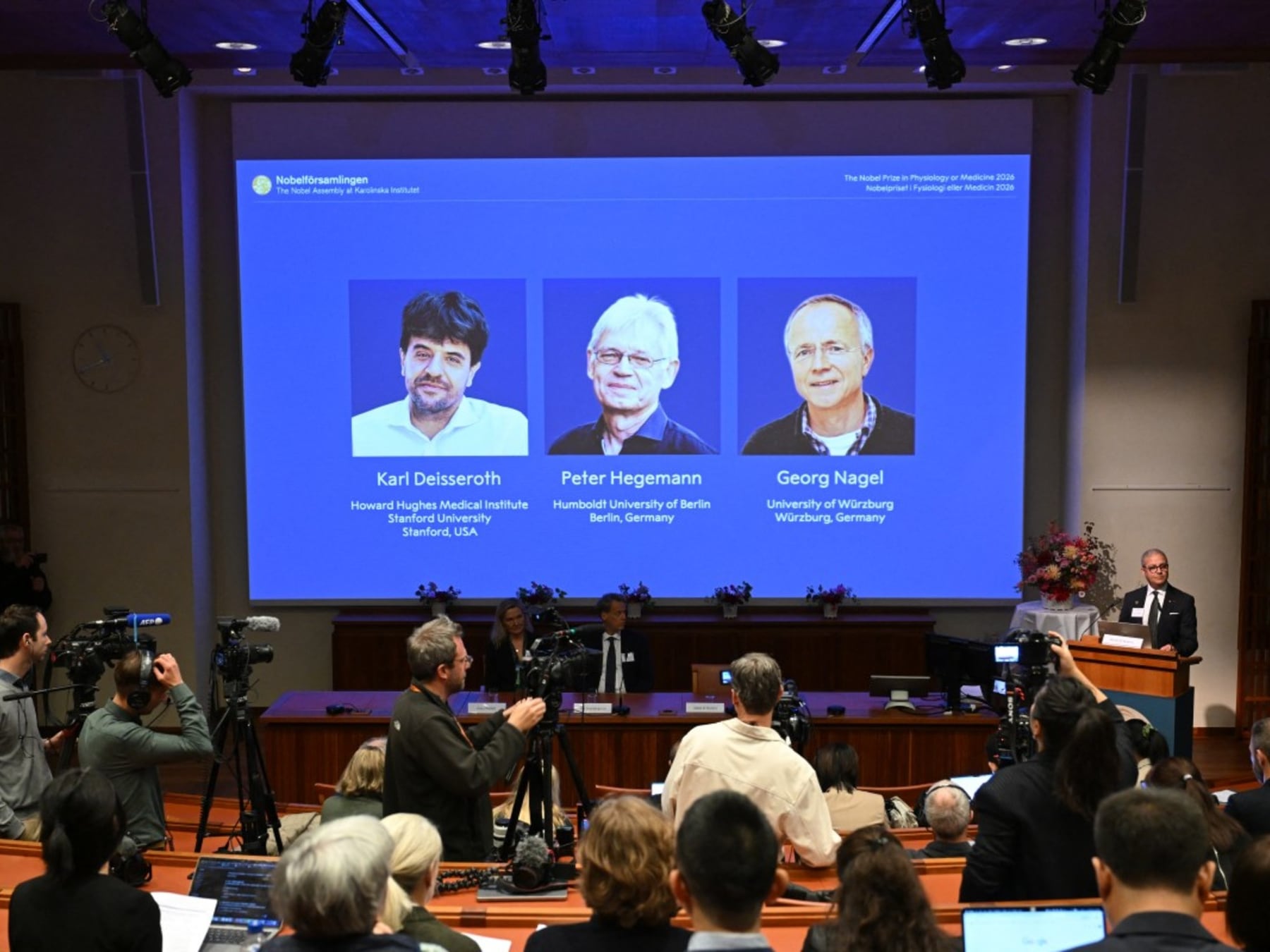
imagined a researcher in a laboratory activating a single brain circuit with a flash of light. Karl Deisseroth, Peter Hegemann y Georg Nagel describes the basic principle of the optogenética.technique that earned them the Nobel Prize in Medicine in 2026: introduce proteins derived from algae into neurons and then use light to turn those neurons on or off with millisecond precision.
The official prize awarded recognition to a method that is already transforming neuroscience research, although its direct applications in people remain limited to the retina. In experimental work with animals, the technique has made it possible to study, with unusual precision, circuits associated with fear, loss of pleasure, compulsive behavior and social interaction.
De regular un edificio a controlar una habitación
Until now, most psychiatric medicines have acted broadly on the brain, increasing or reducing activity across multiple circuits at the same time. The optogenetic approach is more selective: it can target a specific circuit and, in animal studies, alter its activity for a precise period. That difference is comparable to moving from regulating an entire building through its main electrical panel to controlling one room through its individual switch.
The importance of this advance is not limited to the possibility of treating a disease directly. It is also changing the questions clinicians and researchers ask. Instead of considering only which symptoms a person presents, they can begin examining which neural circuit is functioning abnormally and how. This shift could eventually support a more personalized psychiatry, in which two people with the same diagnosis of depression receive different treatments because the underlying circuits are affected in different ways.
- In animals, researchers have identified circuits related to fear, loss of pleasure, compulsive behavior and social interaction.
- The direct applications in humans are currently concentrated in the retina, rather than in deep brain structures.
- In the short term, the technique could improve existing approaches such as transcranial magnetic stimulation and deep brain stimulation.
- It may also guide the development of drugs with more selective effects on particular circuits.
There are also ethical questions that cannot be resolved by science alone. If it became possible to precisely modulate sadness or desire, it would be necessary to establish who decides which emotions or behaviors should be altered, and under what circumstances. The advance expands the possibilities of intervention, but it also requires careful discussion about consent, limits and responsibility.
El límite entre la promesa y la aplicación clínica
The technique's most concrete impact in the near term will therefore be indirect. Its value lies in better understanding brain circuits, refining stimulation procedures and helping researchers design medications that act with greater precision. The promise of a psychiatry based on the circuit that is failing, rather than only on the symptoms that appear, is still ahead, but the research direction is already established.
For people seeking information or support for mental health conditions, the appropriate first step is to consult a psychiatrist or a mental health professional at a health center, hospital or community clinic. Care can also be requested at the emergency room when symptoms are severe or there is immediate risk. Services and opening hours should be confirmed at the specific institution before attending.
Comentarios
0Todavía no hay comentarios. Sé el primero.
Seguí leyendo



El desarrollo infantil se ve afectado cuando no se respetan los ritmos individuales en la escuela